Sending the same email to every audiologist on your list is like handing out hearing aids without a fitting, technically possible, but unlikely to help anyone. A segmented audiologist contact list lets you target pediatric special
ists differently than cochlear implant programmers, private practice owners differently than hospital-based clinicians. This guide covers eight practical ways to segment your audiologist database, the data attributes that make precision targeting possible, and how to stay compliant while running outreach campaigns.
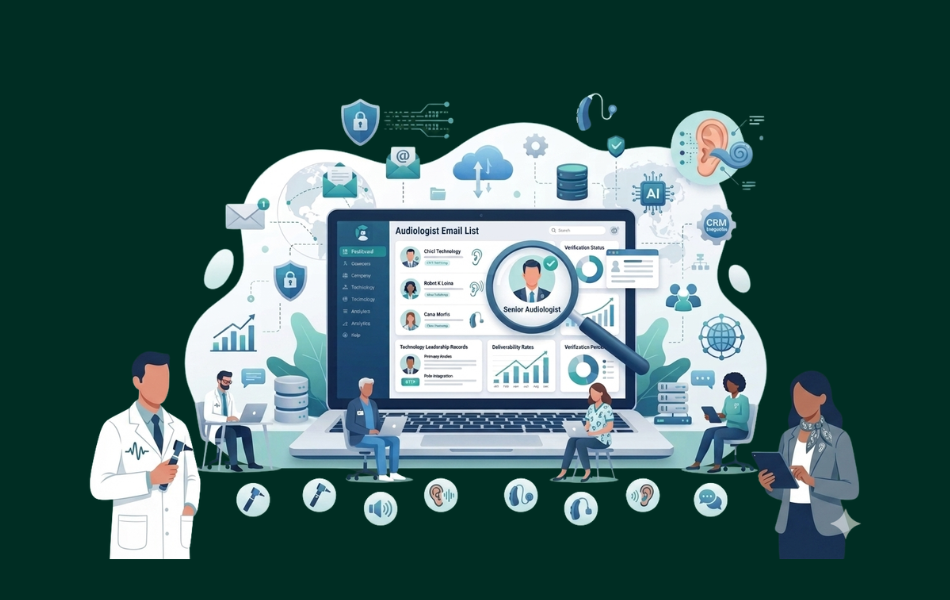
An audiologist contact list is a B2B database containing verified contact details for licensed audiologists and hearing care professionals. Unlike consumer directories such as the American Academy of Audiology’s “Find an Audiologist” tool or ASHA Pro Find, which help patients locate nearby providers, a B2B audiologist list is built for business outreach. Medical device manufacturers, healthcare SaaS vendors, pharmaceutical companies, and recruiters use these lists to connect with audiologists for sales, marketing, and hiring campaigns.
A typical audiologist database includes more than names and email addresses. You’ll find direct phone numbers, practice addresses, National Provider Identifier (NPI) numbers, specialty focus areas, and firmographic details like practice size and annual revenue. The NPI is a unique 10-digit identifier assigned to every healthcare provider in the United States, and it’s one of the most reliable ways to verify that a contact is a licensed, practicing professional.
A raw, unsegmented list is essentially a phone book. It has names and numbers, but no intelligence behind it. Segmentation transforms that list into a precision tool by grouping contacts based on shared characteristics, specialty, geography, practice type, or buying intent.
Here’s why that matters: a pediatric audiologist working in a children’s hospital has different priorities than a cochlear implant specialist running a private practice. Sending the same generic email to both wastes your budget and damages your sender reputation. When recipients mark irrelevant emails as spam, your domain’s deliverability suffers over time.
Segmented campaigns consistently outperform unsegmented sends, driving 30% more opens and 50% more click-throughs. Bounce rates drop and conversion rates improve because your message actually resonates with the person reading it. On top of that, segmentation supports compliance. You can filter by opt-in status and region to stay within GDPR, CCPA, and CAN-SPAM guidelines.
Audiologists don’t all do the same work. Some focus on pediatric hearing loss, others specialize in cochlear implant programming, tinnitus management, vestibular disorders, or hearing aid fitting and dispensing.
Segmenting by specialty ensures your outreach aligns with clinical focus. A manufacturer of vestibular diagnostic equipment, for example, would waste budget targeting audiologists who only fit hearing aids. Common audiology specialties include pediatric audiology, cochlear implants and implantable devices, tinnitus and hyperacusis, vestibular and balance disorders, hearing aid dispensing, and industrial or occupational audiology.
Geographic segmentation is one of the most straightforward yet powerful filters. You can target audiologists by country, state, city, zip code, or metropolitan area.
Regional filtering matters for product launches, state-specific licensing requirements, or local event invitations. If you’re hosting a CME workshop in Texas, there’s no reason to email audiologists in New York. Geo-targeting also supports compliance, GDPR applies to EU contacts, CCPA to California residents, so segmenting by region helps you apply the right consent and opt-out rules.
Where an audiologist works shapes purchasing authority and product needs. A practice owner at a private clinic makes different decisions than a staff audiologist at a hospital system.
Common practice types include private practice (solo or group), hospital-based audiology departments, ENT clinics or physician groups, university or academic medical centers, retail hearing centers like Costco or HearingLife, and VA or government facilities. A hearing aid manufacturer might prioritize private practices with dispensing authority, while an EHR vendor might focus on hospital-based departments with larger budgets.
Firmographic segmentation uses company-level data to filter your list. NAICS (North American Industry Classification System) and SIC (Standard Industrial Classification) codes categorize businesses by industry type.
For audiology, relevant NAICS codes include 621340 (Offices of Physical, Occupational and Speech Therapists, and Audiologists) and 446199 (All Other Health and Personal Care Stores, which includes hearing aid retailers). Beyond industry codes, firmographic filters include practice revenue, number of employees, number of locations, and years in business. Firmographic segmentation is especially useful for enterprise or mid-market sales motions where you’re targeting practices of a certain size.
The NPI (National Provider Identifier) is a unique 10-digit number assigned to healthcare providers in the United States. Filtering by NPI ensures you’re reaching licensed, practicing audiologists, not retired professionals or students.
You can also segment by credential type. AuD refers to Doctor of Audiology, a clinical doctorate. CCC-A stands for Certificate of Clinical Competence in Audiology, an ASHA certification. FAAA means Fellow of the American Academy of Audiology. Credential-based segmentation is particularly valuable for compliance-sensitive campaigns or when targeting audiologists with specific qualifications.
Technographic segmentation targets audiologists based on the software and systems they already use. This includes electronic health records (EHR), practice management software, hearing aid fitting systems, and telehealth platforms.
If you’re a SaaS vendor selling a scheduling tool that integrates with a specific EHR, you’d want to target practices already using that system. Common technology categories for audiology practices include EHR/EMR systems like Blueprint Solutions, Sycle, or CounselEAR, along with practice management software, hearing aid fitting and programming software, and telehealth or remote care platforms.
Intent-based segmentation uses behavioral signals to identify audiologists who are actively researching solutions or showing interest in your category.
Behavioral signals might include downloading a whitepaper or product guide, attending a webinar or virtual event, clicking on email links multiple times, or visiting your pricing page. High-intent segments deserve priority in your sales outreach. Reaching engaged contacts quickly can shorten your sales cycle significantly.
The depth of your data determines how precisely you can segment. A basic list with just names and emails limits your options. A multi-attribute database with 35+ fields opens up dozens of segmentation possibilities.
Reputable data providers source contacts through opt-in methods, conferences, professional directories, surveys, and verified public records. They also maintain regular verification cycles (often every 45 days) to counteract B2B data decay of 22–25% annually and remove outdated or unsubscribed contacts. Before launching any campaign, confirm that your data provider adheres to relevant standards.
A well-segmented audiologist database supports a wide range of B2B outreach scenarios.
Manufacturers and distributors in a market projected to reach $37.81 billion by 2034 use audiologist lists to promote hearing aids, cochlear implants, diagnostic equipment, and assistive listening devices. Segmenting by specialty and practice type ensures you’re reaching audiologists who actually dispense or recommend products in your category.
Healthcare recruiters and staffing agencies use audiologist lists to fill positions at hospitals, clinics, and private practicesa field with roughly 700 openings projected each year. Role and geography segmentation helps match candidates to open positions.
A well-segmented audiologist contact list helps businesses move beyond generic outreach and connect with hearing care professionals more effectively. By organizing contacts based on specialty, geography, practice type, credentials, technology stack, and buying intent, marketers can deliver highly relevant messages that improve engagement, conversions, and overall campaign performance.
The quality of your data directly impacts your results. A verified audiologist database with accurate contact details and rich segmentation fields enables precise targeting while supporting compliance with GDPR, CCPA, CAN-SPAM, and other regulations. With the right data strategy, organizations can generate qualified leads, strengthen relationships, and maximize healthcare marketing ROI.


What Is B2B Data? A Complete Guide to Business Contact & Company Data B2B data is information about businesses and