Expanding into new markets without reliable contact data is like navigating foreign territory without a map you might eventually find your destination, but you’ll waste time and resources getting there. International B2B data gives sales and marketing teams verified access to decision-makers across borders, turning global outreach from guesswork into targeted strategy.
The challenge is that data quality varies dramatically between providers, and choosing the wrong one means bounced emails, compliance headaches, and wasted budget. This guide compares the top 15 international B2B data providers for 2026, breaks down evaluation criteria, and covers the pitfalls that trip up even experienced teams.
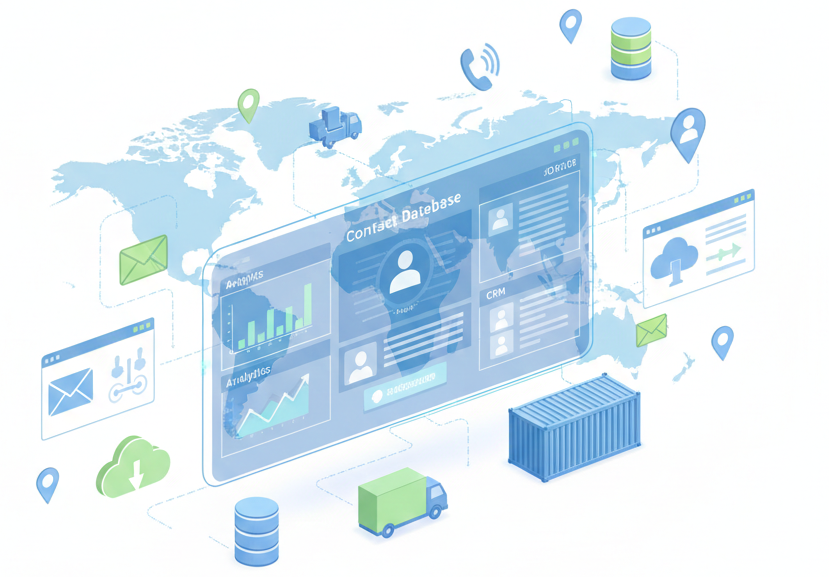
International B2B data includes verified contact details, firmographics, and technology insights for companies operating across global markets. Sales and marketing teams use this data for cross-border outreach, market research, and lead generation campaigns targeting decision-makers in regions like APAC, EU, and North America.
The provider you choose depends on your target regions, the types of data you require, and your compliance obligations. Here’s how the leading platforms stack up.
eSalesClub provides access to 180M+ contacts across 140+ countries, with segmentation options covering industry, job title, geography, and technology stack. A 7-tier verification process combines AI and human validation, and data refreshes every 45 days.
Best for: Teams looking for customizable international B2B data with opt-in compliance across GDPR, CCPA, CAN-SPAM, CASL, and ACMA.
ZoomInfo delivers enterprise-level sales intelligence with deep US market coverage, org charts, and intent signals. The platform updates daily using AI and human verification.
Best for: Large organizations running account-based marketing campaigns that require multi-contact engagement within target accounts.
Cognism takes a GDPR-first approach, offering strong EU and UK coverage with mobile-verified contacts. Their “Diamond Data” quality assurance involves human researchers verifying contacts within 72 hours.
Best for: European market expansion and teams prioritizing privacy law adherence.
Apollo.io pairs a large contact database with built-in email sequencing and tracking tools. The platform is popular among startups and mid-market companies for its all-in-one approach.
Best for: Sales teams wanting prospecting data and outreach automation in a single platform.
Lusha offers a browser extension for quick contact enrichment directly from LinkedIn and company websites. The interface is straightforward, with pay-as-you-go pricing.
Best for: Individual sales reps who want on-demand contact lookup without complex subscriptions.
Clearbit specializes in real-time data enrichment and firmographic intelligence. The platform integrates directly with marketing automation tools for lead scoring and website visitor identification.
Best for: Marketing teams focused on enriching inbound leads and identifying anonymous website visitors.
SalesIntel provides human-verified contacts with a research-on-demand service for hard-to-find decision-makers. The platform has strong North American coverage.
Best for: Teams prioritizing data accuracy over volume, particularly in US and Canadian markets.
Seamless.ai uses AI-powered real-time search to find contact information, including direct dial numbers. The platform focuses on high-volume prospecting with continuous database updates.
Best for: Sales teams running high-volume outbound campaigns requiring direct phone numbers.
RocketReach provides email and phone lookup across professional profiles with broad coverage of individual contacts. The search interface is simple, with API access available.
Best for: Recruiters and sales professionals who want individual contact discovery rather than bulk lists.
UpLead offers 160M+ contacts with real-time email verification. Credits-based pricing makes the platform accessible for smaller teams.
Best for: SMBs wanting affordable, verified B2B contacts with transparent pricing.
Lead411 combines verified contacts with intent data showing which companies are actively researching solutions. Trigger alerts notify you of buying signals.
Best for: Teams targeting companies showing active purchase intent.
Adapt.io provides industry-specific contact databases with API access for integration into custom workflows. Coverage is strong in technology and SaaS sectors.
Best for: Tech companies targeting specific verticals with API-driven data requirements.
Datarade operates as a marketplace connecting buyers with multiple B2B data providers. You can compare vendors before making a purchase.
Best for: Organizations evaluating multiple data sources or seeking specialized regional providers.
Data Axle offers deep US business coverage with legacy database strength. The platform is particularly useful for direct mail and traditional marketing channels.
Best for: Companies running multichannel campaigns that include direct mail alongside digital outreach.
LeadGenius provides custom data research and enrichment services using human researchers for bespoke, hard-to-find contact data.
Best for: Enterprise teams requiring specialized data that automated tools struggle to source.
Provider | Regional Strength | Best For | Key Differentiator |
eSalesClub | Global (140+ countries) | Customizable international lists | 7-tier verification, 45-day refresh |
ZoomInfo | US, Global enterprise | Large-scale ABM | Org charts, intent signals |
Cognism | EU/UK | GDPR-compliant outreach | Diamond Data verification |
Apollo.io | US, Tech sectors | All-in-one prospecting | Built-in sequencing tools |
Lusha | Global | Quick contact lookup | Browser extension |
UpLead | US, Global | SMB prospecting | Real-time email verification |
Not all B2B data providers deliver equal value. Knowing what separates reliable sources from time-wasting lists helps you avoid costly mistakes.
High-quality providers use multi-tier verification that combines AI checks with human validation. SMTP validation checks whether email addresses accept mail, while domain verification confirms the company exists. Tele-verification involves researchers confirming contacts by phone.
Accuracy directly impacts campaign ROI Gartner estimates poor-quality data costs companies approximately $12.9 million annually. A database with 95% accuracy versus 70% accuracy means the difference between productive outreach and wasted budget on bounced emails.
Coverage breadth (number of countries) differs from depth (contact density per region). Some B2B data providers excel in US markets but offer thin coverage in APAC or Latin America.
Matching provider strengths to your target markets matters. If you’re expanding into Germany, a provider with 50,000 verified German contacts beats one with 500,000 US contacts.
Cross-border outreach requires navigating multiple privacy frameworks:
Reputable providers document consent and maintain opt-in records you can reference if challenged.
The ability to filter precisely determines whether you reach relevant prospects or waste budget on irrelevant contacts. Key segmentation options include industry vertical, job title and seniority, company size and revenue, geographic targeting down to city level, and technographics showing which software companies use.
Data that doesn’t integrate smoothly into your workflow creates friction. Standard delivery formats include CSV and Excel files, while advanced providers offer API access or direct integrations with Salesforce, HubSpot, and other CRMs.
Pricing models vary across subscription access, pay-per-record, and credit systems. Total value includes support quality, refresh frequency, and replacement guarantees for bounced contacts not just the initial price per record.
Even experienced teams make mistakes when sourcing international contact data. Here’s what to watch for.
B2B data decays rapidly. Job changes, company closures, and role transitions make contacts stale within months. Providers with regular refresh cycles (monthly or quarterly) and active verification processes maintain higher accuracy than static databases.
Using non-compliant data in EU markets (GDPR) or California (CCPA) creates legal liability DLA Piper’s GDPR survey reports €5.88 billion in total fines issued since 2018. Before purchasing, verify that contacts are opt-in and that the provider can document consent records.
Generic lists waste budget on irrelevant contacts. If you’re targeting CFOs at manufacturing companies with 500+ employees in Germany, you want granular filtering—not a broad “European business contacts” list.
High bounce rates damage your sender reputation, affecting future email deliverability over 20% of commercial emails in the US and Canada never reach subscriber inboxes. Requesting accuracy guarantees and sample data before purchasing full lists helps avoid this problem. Reputable providers offer replacement credits for bounced contacts.
The purchase price is just the beginning. Integration time, data cleaning requirements, and ongoing refresh costs all factor into the total investment when comparing providers.
Understanding data types helps you request exactly what your campaigns require.
A verified B2B contact database with emails, phone numbers, and direct dials for business professionals forms the foundation of outbound campaigns. Quality varies significantly some providers offer only generic company emails while others provide direct lines to decision-makers.
Firmographics describe company characteristics: size, industry, revenue, employee count, location, and classification codes like SIC or NAICS. This data enables ICP (Ideal Customer Profile) matching and account-based targeting.
Technographics reveal which technologies companies currently use CRM platforms, ERP systems, marketing tools, cloud providers. This data is particularly valuable for tech vendors targeting users of specific platforms or competitors’ products.
Intent data captures behavioral signals indicating active research or buying interest. When a company’s employees are searching for solutions in your category, intent data helps you prioritize prospects showing purchase readiness.
Enrichment services append missing fields to existing records—adding emails, phones, or firmographics to partial data in your CRM. This improves incomplete records without requiring a full database purchase.
Compliance protects your sender reputation and builds trust with prospects.
Each regulation has distinct requirements. GDPR applies to EU residents regardless of where your company is located. CCPA gives California residents specific rights around data sales. CAN-SPAM governs US commercial email with opt-out requirements.
“Opt-in” means contacts have explicitly consented to receive communications. Reputable providers document consent and can provide records if challenged. Providers who can’t explain their consent collection methods are worth avoiding.
Beyond compliance, data security matters. Encryption, restricted access controls, and third-party security audits indicate a provider takes data protection seriously.
Accuracy claims vary widely. Here’s how to evaluate them.
The most reliable providers combine multiple verification layers: AI-driven checks for format and deliverability, human verification for accuracy, and phone verification for direct dials. Each layer catches errors the others miss.
B2B contacts change jobs frequently. Providers refreshing data monthly or quarterly maintain higher accuracy than providers updating annually.
Deliverability rate measures what percentage of emails reach inboxes rather than bouncing. Asking about replacement policies for contacts that bounce helps you understand what guarantees a provider offers.
Understanding where data originates helps you assess quality and legitimacy.
Business registrations, SEC filings, and licensing databases provide verified company-level information. Public records offer high accuracy for firmographics but limited contact details.
Industry associations, trade publications, and professional directories provide verified business information with some contact details. Directory sources tend to be accurate but may have limited coverage.
LinkedIn profiles and professional associations provide rich contact data. Reputable providers use compliant methods rather than direct scraping, which violates platform terms of service.
Attendee lists, exhibitor directories, and speaker information provide high-intent contacts actively engaged in their industry. Event-sourced data often converts well because contacts are already networking.
Understanding pricing drivers helps you budget accurately and negotiate effectively.
More contacts typically means higher cost. Per-record pricing ranges from pennies for basic data to several dollars for verified, enriched contacts. Subscription models offer unlimited access within defined parameters.
Global coverage costs more than single-region access. Specialized regional data—particularly in markets with strict privacy laws like the EU—may command premium pricing due to compliance costs.
Highly filtered lists with multiple criteria cost more than broad lists. Custom research requests for hard-to-find contacts add to the total cost.
Basic CSV delivery is typically included, while API access or direct CRM integrations may increase pricing. Consider what format your team can actually use effectively.
Ready to create a targeted list? Here’s how to approach the process.
Start by defining your ICP. Which industries do your best customers come from? What job titles make purchasing decisions? What seniority level has budget authority? The answers drive your segmentation criteria.
Matching data coverage to your sales territories matters. Country-level targeting works for broad campaigns, while city-level targeting supports localized outreach or field sales teams.
Company size and revenue filters help you reach organizations that fit your product. Technographic filters help you target users of specific platforms particularly valuable for tech vendors.
Working with providers to build tailored lists matching your exact specifications is one approach. If you have existing partial records, data appending services can fill in missing fields without requiring a full database purchase.
The difference between successful international outreach and wasted effort often comes down to data quality. Verified, compliant, and precisely segmented contact data enables your team to focus on conversations rather than list cleaning.
With the right provider, your messages reach real decision-makers, your campaigns comply with regional regulations, and your budget goes toward productive outreach rather than bounced emails.
Most reputable providers offer free sample lists tailored to your specifications. Submitting your targeting criteria through their website form typically results in a sample before committing to a full purchase.
Standard delivery formats include CSV and Excel files that import directly into CRMs. Some providers also offer API access or direct integrations with platforms like Salesforce and HubSpot.
B2B contact data benefits from quarterly refreshes since job changes and company updates cause rapid data decay. Some providers offer automatic refresh cycles as part of subscription plans.
Yes, provided the data includes verified phone numbers and complies with regional telemarketing regulations like TCPA in the US or local do-not-call registries in your target markets.
B2B data providers supply contact databases for self-service outreach, while lead generation services actively qualify and deliver sales-ready leads through managed campaigns.
Yes, most providers allow filtering by country, region, or continent so you can purchase only the geographic segments relevant to your target markets.